
TL;DR Quick Answers
Junk Removal Locations
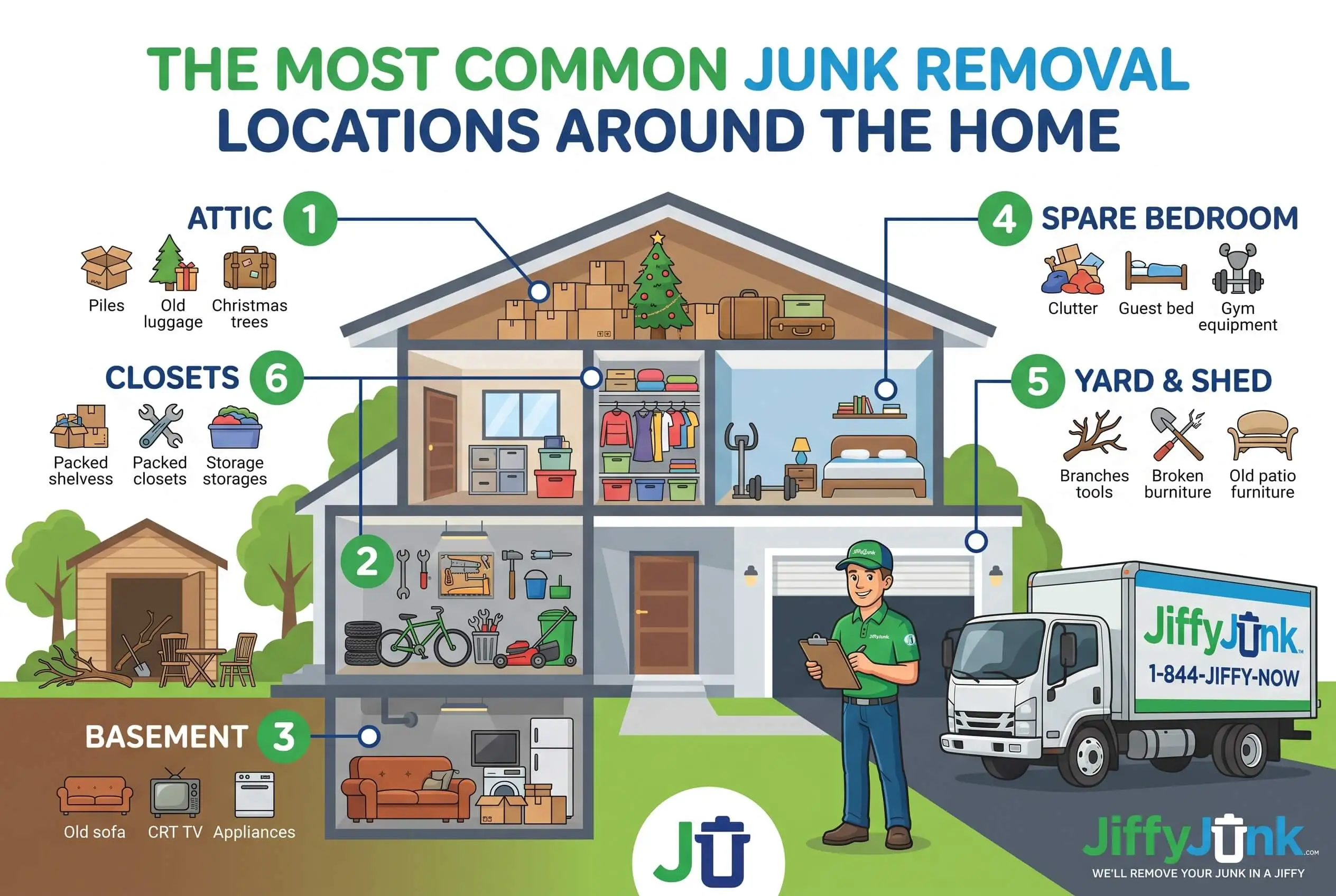
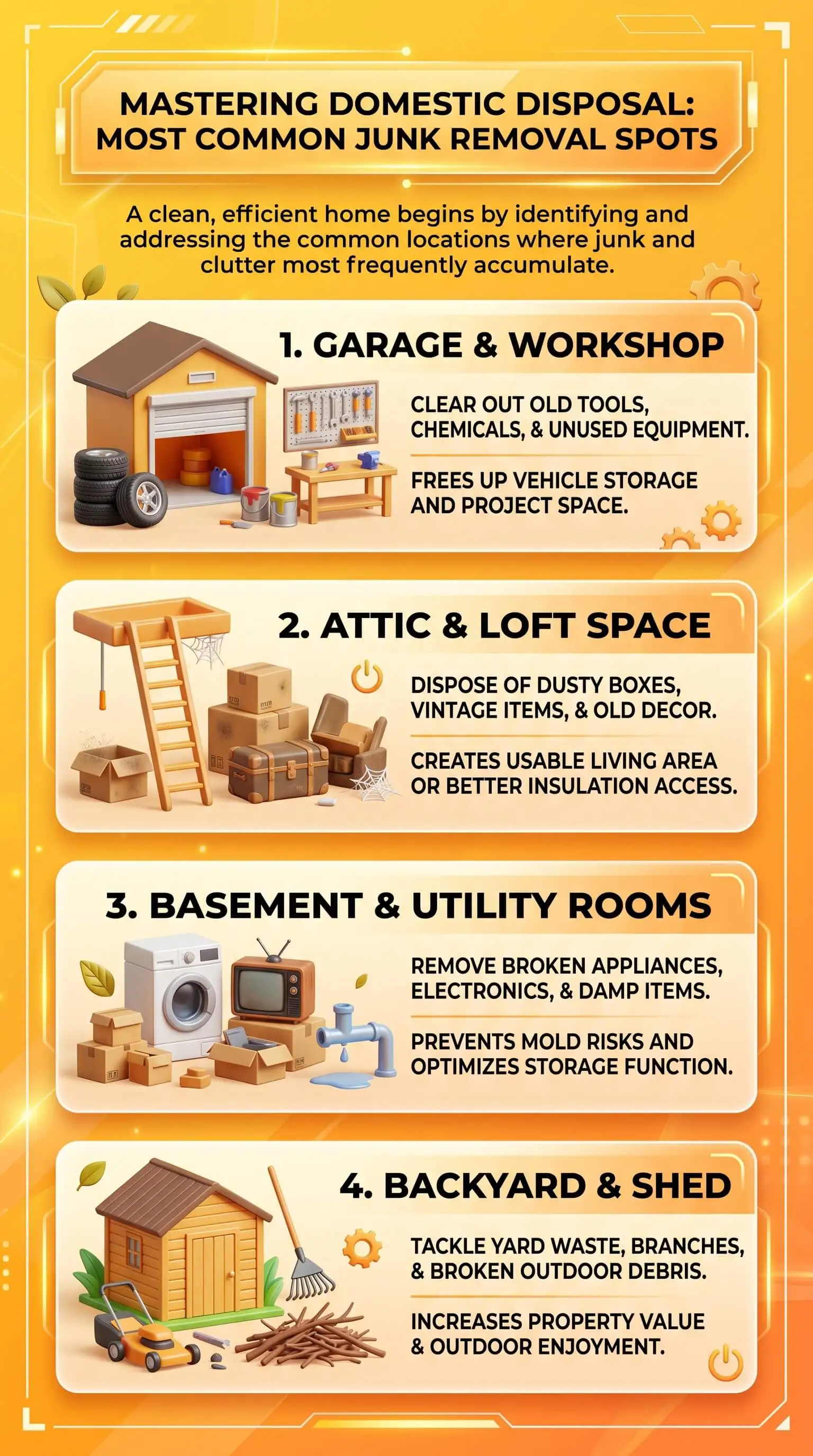
In most homes, junk doesn't scatter everywhere. It collects in the same predictable spots. After thousands of cleanouts, we see the heaviest buildup in these locations:
Garage (the top offender almost every time)
Basement
Attic
Bedroom and hallway closets
The spare or "junk" room
Kitchen cabinets and pantry
Home office
Bathroom cabinets and under the sink
Laundry and utility area
Shed and outdoor storage
Start with the garage and basement. Clear those two and you've cleared most of the load.
Top Takeaways
Junk shows up in the same places every time: garage, basement, attic, closets, and spare rooms lead the pack.
Clear one zone at a time so the work stays manageable and you can see the progress.
Donate or recycle whatever you can, and keep usable things out of the waste stream.
Sort as you go: keep, donate, or haul, before anything leaves the room.
When the load is heavy or you want it gone in one trip, professional junk removal does the lifting and hauling for you.
Room-by-Room: Where Junk Hides Most
Start with the spots that hold the most, and you'll see residential junk removal progress fast because those bigger clutter zones make the biggest difference first. These are the ones worth hitting first.
The Garage
The garage wins this contest in most homes, and it isn't close. Bikes nobody rides, half-used paint cans, dead tools, and seasonal gear stack up until the car gets evicted to the driveway. Drag everything to the center, make three piles for keep, donate, and haul away, and you'll reclaim real square footage in an afternoon.
The Basement
Basements collect the stuff people can't quite decide on. Old couches, holiday bins, and boxes nobody has opened since the last move settle in for the long haul. Work one corner at a time so it never turns into an all-day slog.
The Attic
Attics get whatever we'd rather not think about: baby gear, broken lamps, furniture saved for a someday that never comes, and clutter tucked near duct work that’s easier to clear once you know where to look. Be honest about what you'll really use again. Most of it, you won't.
Bedroom Closets
Clothes you haven't touched in a year crowd out the ten things you actually wear. Add the orphaned hangers and the shoes worn past saving, and the closet stops working. If you didn't reach for it last season, let it go.
The Spare Room
Guest rooms have a way of becoming the place everything lands when it has nowhere else to go. One day you look up and it's storage, not a bedroom. When you're stacking boxes instead of hosting people, it's time to reset the room.
Kitchen Cabinets and Pantry
Expired cans, the third spatula, and mugs with chips push out the space you use every day. Clear them and cooking gets easier the very next morning.
The Home Office
Paper multiplies. So do dead chargers, tangled cables, and the laptop you replaced two years ago. Shred what you can, and recycle the old electronics instead of shoving them back in a drawer.
Bathroom Cabinets
Half-empty bottles, expired medicine, and towels worn thin hide under the sink and behind the mirror. A ten-minute purge here is one of the easiest wins in the house.
The Laundry and Utility Area
Empty jugs, single socks, and broken odds and ends gather around the machines. It's a small space and a quick job, and the payoff feels bigger than the effort.
The Shed and Outdoor Storage
Rusted tools, cracked pots, and leftover lumber sit out back slowly turning into nothing useful. Keep what still works. Everything else has earned its trip to the curb.
"After enough cleanouts, I can call it before we're through the front door. The garage and basement are packed nine times out of ten, and there's almost always a spare room that became a storage unit when nobody was looking. What gets people is how much lighter the whole house feels once those few rooms are clear. So we tell everyone the same thing: start where the junk is thickest, not where it's easiest, because that's where your space is hiding."
7 Essential Resources
Before you haul anything off, these can help you donate, recycle, or dispose of it the right way.
EPA Reducing and Reusing Basics lays out simple ways to cut waste and give items a second life.
Earth911 Recycling Search finds local drop-off points for almost any material by ZIP code.
Habitat for Humanity ReStore takes furniture, appliances, and building materials, often with free pickup.
Goodwill Donate Goods lets you drop clothing, housewares, and electronics at a nearby location.
Salvation Army Donation Pickup schedules a free pickup for the big stuff like sofas and tables.
Call2Recycle Drop-off Locator points you to safe battery recycling instead of the trash.
EPA Electronics Donation and Recycling shows you how to retire old TVs, computers, and phones responsibly.
Supporting Statistics
A long-running UCLA study of Los Angeles families found that 75 percent didn't park in their garages, because stored clutter had crowded the cars out.
The U.S. Environmental Protection Agency puts the average American's trash at about 4.9 pounds a day, measured in 2018.
The country now has more than 50,000 self-storage facilities, outnumbering several big fast-food and retail chains combined, which tells you how much extra stuff households are paying to keep.
Final Thought & Opinion
Here's where most decluttering advice gets it wrong. It tells you to do the whole house at once, and you burn out by lunch. We'd rather you hit the few rooms where junk actually concentrates. Clear the garage, the basement, and that one spare room that turned into storage, and you've solved most of the problem in a fraction of the time. The rest of the house tends to fall in line on its own. Start small, keep at it, and call for backup when the load gets too heavy to wrestle alone. While clearing out can look like owning less, what it really buys you is room for the life you actually want at home.
 Frequently Asked Questions
What's the most cluttered room in most homes?
The garage, hands down. Cleanout crews and home surveys both put it first, with the basement right behind.
Where should I start?
Go straight for the room holding the most junk, usually the garage or basement. Clear the biggest pile first and the momentum carries you through the rest.
What do I do with things I can't donate or sell?
Recycle what you can and dispose of the rest the right way. A recycling locator or a junk removal crew can get each item where it belongs.
When is it worth hiring a junk removal service?
When the stuff is heavy, bulky, or you just want it gone in one trip. We handle the lifting, the sorting, and the hauling.
How often should I clear these areas?
One solid pass a year, maybe two, keeps the big zones from filling back up.
Ready to Clear It Out for Good?
You don't have to wrestle the heavy stuff alone. Map your clutter zones, then let a crew handle the haul while you enjoy the open space. Schedule same-day junk removal or request a quote today, and take your home back one room at a time.